

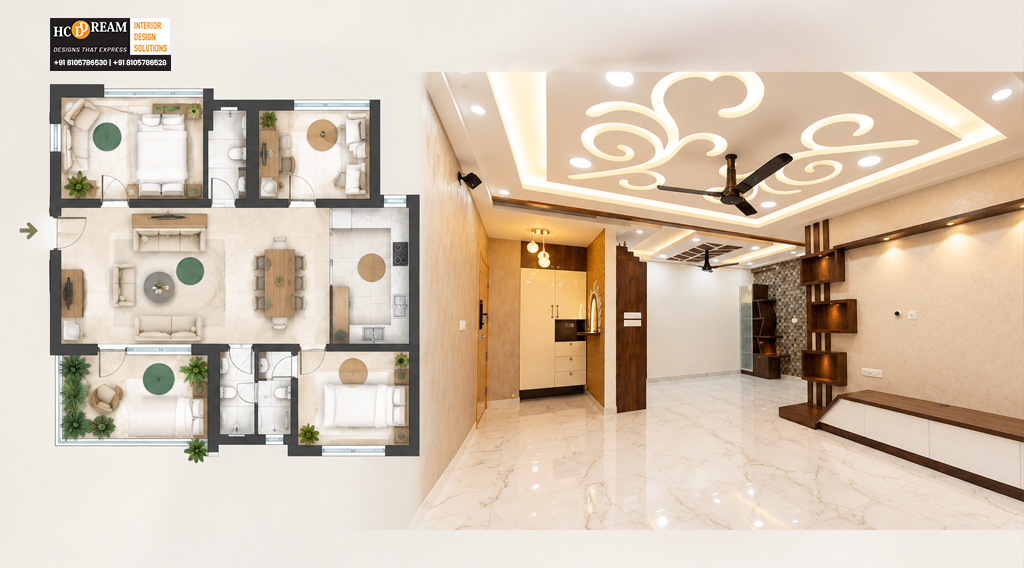
A home can look beautiful and still leave you feeling restless. Another space may be simple, yet the moment you enter, you feel calmer, lighter, and more at ease.
That difference is not always about furniture, colour or décor. It is often about how a space makes you feel.
The psychology of interior design explores the connection between our surroundings and our emotions, behaviour, comfort and everyday routines. From the amount of natural light entering your bedroom to the way furniture is arranged in your living room, thoughtful design can quietly influence how you experience your home.
For Bangalore homeowners, where busy schedules and compact urban homes are increasingly common, creating interiors that support both lifestyle and emotional well-being has become just as important as creating a stylish space.
What Is the Psychology of Interior Design?
The psychology of interior design is about understanding how physical surroundings influence human experiences.
Colours, lighting, textures, proportions, layouts, sounds and even the amount of visual clutter around us can affect our mood and behaviour.
A well-designed home does not simply answer the question, “Does this look good?”
It also asks:
- Does this space feel peaceful?
- Is it easy to move around?
- Does the lighting support the activity?
- Can the room help you relax at the end of the day?
- Does the environment reflect the people living in it?
This is where wellbeing through design becomes meaningful. The goal is not to create a home that follows a trend perfectly, but one that works naturally with the way you live.
How Your Home Can Influence Everyday Well-Being
We spend a significant part of our lives at home. Naturally, our surroundings can influence our daily emotional state.
A cramped room may feel overwhelming. Poor lighting can make a space feel dull. Excessive clutter can create visual noise, while a balanced layout can make the same square footage feel significantly more comfortable.
Thoughtful interiors can support everyday moments such as:
- Starting your morning with natural light
- Unwinding in a comfortable bedroom
- Working without unnecessary distractions
- Spending quality time with family
- Entertaining friends comfortably
- Finding quiet moments to read or relax
Good design therefore becomes more than decoration. It becomes part of your daily routine.
Why Some Spaces Feel More Comfortable Than Others
Have you ever walked into a room and immediately felt comfortable without knowing why?
Several design elements can contribute to that response.
1. Balanced Proportions
Furniture that is too large can make a room feel cramped. Pieces that are too small may make the space feel unfinished.
When furniture, walls, openings and décor have a natural visual relationship, the room tends to feel more balanced.
2. Clear Movement
A room becomes easier to experience when there is enough space to move naturally.
You should not have to navigate around furniture every time you walk from the bedroom to the wardrobe or from the sofa to the kitchen.
Good planning creates intuitive movement, reducing small frustrations throughout the day.
3. Familiarity and Personal Connection
A home feels more comforting when it reflects the people who live there.
Family photographs, meaningful objects, favourite colours, books and carefully selected décor can give a space a sense of identity.
This is one reason tailored interiors often feel more satisfying than spaces designed purely around visual trends.
The Role of Colour in Emotional Well-Being
Colour is one of the most noticeable elements in any interior, and it can influence the atmosphere of a room.
Soft neutrals can create a calm backdrop, while warmer tones can make spaces feel welcoming and intimate. Deeper shades may add character and drama when used thoughtfully.
For bedrooms, the choice becomes particularly important because the room should support rest.
Consider:
- Warm neutrals for a relaxed atmosphere
- Muted greens or blues for a gentle, restful feel
- Soft earthy shades for warmth
- Subtle accent colours for personality
The key is balance. A colour that looks beautiful in a showroom may not necessarily create the right atmosphere for your particular room.
Bedrooms: Designing for Rest and Recovery
The bedroom deserves special attention because it is closely connected to sleep, relaxation and personal downtime.
A stylish bedroom should not feel like a showroom. It should feel like a place where your mind can slow down.
Start With the Bed
The bed is usually the visual and functional centre of the room. Its position should allow comfortable movement while maintaining a sense of openness.
Avoid placing too many competing elements around it. A simple, well-proportioned headboard, appropriate bedside lighting and comfortable textiles can create a more restful environment.
Reduce Visual Noise
Bedrooms often accumulate unnecessary items: clothes, accessories, electronics and miscellaneous objects.
Integrated wardrobes, bedside storage and concealed compartments can help keep everyday clutter under control.
A cleaner visual environment can make it easier to mentally transition from an active day to a quieter evening.
Choose Lighting Carefully
One harsh ceiling light rarely creates the right bedroom atmosphere.
Instead, consider layers:
- General lighting for everyday use
- Bedside lights for reading
- Accent lighting for warmth
- Wardrobe lighting for functionality
The ability to control lighting according to the time of day gives the bedroom greater flexibility.
Natural Light and Its Effect on How a Home Feels
Natural light can transform the perception of a room.
A bright room can feel more open and energetic, while softer daylight can create a calm and inviting atmosphere. Windows also provide a visual connection with the outside world.
For Bangalore homes, where apartment layouts vary considerably, designers can work with the available daylight rather than treating windows as an afterthought.
Make the Most of Available Daylight
Simple strategies can help:
- Keep window areas visually open
- Use curtains that allow daylight when privacy permits
- Position mirrors thoughtfully to reflect light
- Avoid unnecessarily blocking windows with tall furniture
- Choose finishes that interact well with natural light
The objective is not simply to make a room brighter. It is to create a more pleasant rhythm between morning, afternoon and evening.
How Layouts Influence Emotions
The psychology of interior design is closely connected to spatial planning.
Imagine two bedrooms with exactly the same dimensions. In one, the bed blocks movement, the wardrobe doors are difficult to open and furniture crowds the room.
In the other, the furniture is positioned logically, storage is accessible and circulation feels effortless.
The dimensions have not changed.
The experience has.
Home Layout Planning Should Reflect Real Life
A good layout considers what happens inside a room rather than simply where objects can fit.
For example, bedroom planning should account for:
- Where you enter the room
- How you approach the bed
- How wardrobe doors open
- Where you get dressed
- Where lighting controls are located
- Where you place personal items
- How the room connects to attached spaces
This level of planning helps eliminate everyday friction.
Can Interior Design Reduce Stress?
Interior design cannot eliminate the stresses of modern life, but the right environment can make home feel more restorative.
Think about the difference between coming home to a cluttered, poorly lit room and entering a space where everything has a logical place.
The second environment can encourage a sense of order and calm.
This is where wellbeing through design becomes practical rather than theoretical.
Design Elements That Can Support a Calmer Home
- Organised storage
- Comfortable furniture
- Softer lighting
- Natural materials and textures
- Balanced colour palettes
- Clear circulation
- Personal touches
- Dedicated spaces for different activities
The result is not necessarily a minimalist home. It is a home where the things you own have a purpose and a place.
Designing Homes Around Different Personalities
There is no single definition of a relaxing home.
One homeowner may feel comfortable surrounded by books, artwork and warm textures. Another may prefer clean surfaces, neutral colours and minimal décor.
That is why copying a popular interior from social media rarely produces the same emotional result.
Your Lifestyle Should Guide the Design
Ask yourself:
- Do I prefer quiet and minimal surroundings?
- Do I enjoy entertaining frequently?
- Do I need a dedicated work area?
- Do I prefer warm or cool colour palettes?
- Do I need additional bedroom storage?
- Which parts of my home do I use most?
- What currently frustrates me about my space?
The answers provide valuable direction for the design process.
Creating Well-Being Through Better Storage
Storage may seem purely functional, but it can have a surprisingly strong influence on how a home feels.
When everyday belongings are scattered across visible surfaces, rooms can quickly feel chaotic.
Thoughtfully designed storage allows the home to remain visually composed while keeping frequently used items accessible.
In bedrooms, this might mean:
- Full-height wardrobes
- Dedicated accessory storage
- Built-in bedside units
- Hidden compartments
- Organised wardrobe interiors
- Space for seasonal belongings
The best storage is often the storage you barely notice.
Why Professional Interior Planning Matters
Creating a beautiful room is one thing. Creating a beautiful room that works effortlessly every day requires deeper planning.
This is where working with the Best Interior Design Company in Bangalore can make a meaningful difference. Experienced designers consider spatial relationships, lifestyle requirements, materials, lighting and functionality together rather than treating each element separately.
Homeowners searching for the Best Interior Designer in Bangalore should look beyond photographs and ask how the designer approaches the entire living experience.
A strong design process should understand:
- Your lifestyle
- Your priorities
- Your available space
- Your storage requirements
- Your aesthetic preferences
- Your long-term needs
For homeowners in East Bangalore, finding Best Interior Designers in Whitefield Bangalore can also be about choosing a team that understands modern apartment layouts and the practical realities of urban living.
Likewise, people searching for Interior Designers Near me Bangalore should evaluate communication, planning, execution and attention to detail… not just the final photographs.
Designing a Home That Feels Like You
The most successful interiors do not necessarily make the biggest visual statement.
They make everyday life feel easier.
You notice it when you wake up in a well-planned bedroom. You notice it when there is a place for everything. You notice it when afternoon light fills your living room or when the evening lighting creates a quieter mood.
That is the real value of thoughtful design.
The psychology of interior design reminds us that our homes are not passive backgrounds. They are environments we interact with every day.
When design responds to human needs, wellbeing through design becomes part of the experience rather than an additional feature.
How HCD DREAM Interiors Approaches Human-Centred Design
At HCD DREAM Interiors, design is approached as a combination of aesthetics, functionality and the way homeowners actually live.
From space planning and material selection to lighting, storage and final execution, every decision should contribute to a cohesive home.
For a premium interior project, the goal is not simply to fill a room with beautiful elements. It is to create an environment that feels considered from the moment you walk through the door.
Whether you are planning a new apartment in Bangalore or redesigning an existing home, thoughtful design can turn everyday routines into more comfortable experiences.
Final Thoughts
A beautiful home can impress you for a moment.
A thoughtfully designed home can make you feel good every single day.
From the colours on your bedroom walls to the amount of daylight entering your living room, small design decisions can influence comfort, mood and daily routines.
The best interiors therefore balance what looks beautiful with what feels right.
And when your home is designed around your lifestyle, the result is not just better interiors—it is a better everyday experience.
FAQs
1. How does interior design affect mental well-being?
Interior design can influence comfort, mood and daily behaviour through factors such as lighting, colour, layout, noise, clutter and personalisation. A well-planned environment can feel calmer, more organised and easier to use.
2. Can home design reduce stress?
Thoughtful home design can help reduce everyday sources of frustration. Organised storage, comfortable furniture, good lighting and clear circulation can create a more relaxing environment.
3. Why do some spaces feel more comfortable?
Comfort can come from balanced proportions, intuitive layouts, appropriate lighting, pleasant textures and a sense of familiarity. Personal elements can also make a space feel more emotionally connected to its occupants.
4. How do layouts influence emotions?
Layouts affect how easily people move, interact and use a room. A cramped or obstructed layout can feel frustrating, while a well-planned arrangement can create a greater sense of openness and ease.
5. What role does natural light play?
Natural light can make interiors feel brighter, more open and connected to the outdoors. Good planning can help maximise available daylight while maintaining privacy and comfort.
Create a Home That Feels as Good as It Looks
Your home should do more than look beautiful in photographs. It should support your routines, reflect your personality and give you a place to genuinely switch off.
If you are planning a new home interior in Bangalore, HCD DREAM Interiors can help you bring together thoughtful space planning, refined aesthetics and practical functionality through an end-to-end design approach.
Ready to create a home designed around the way you live? Get in touch with HCD DREAM Interiors and start planning your dream space today.