

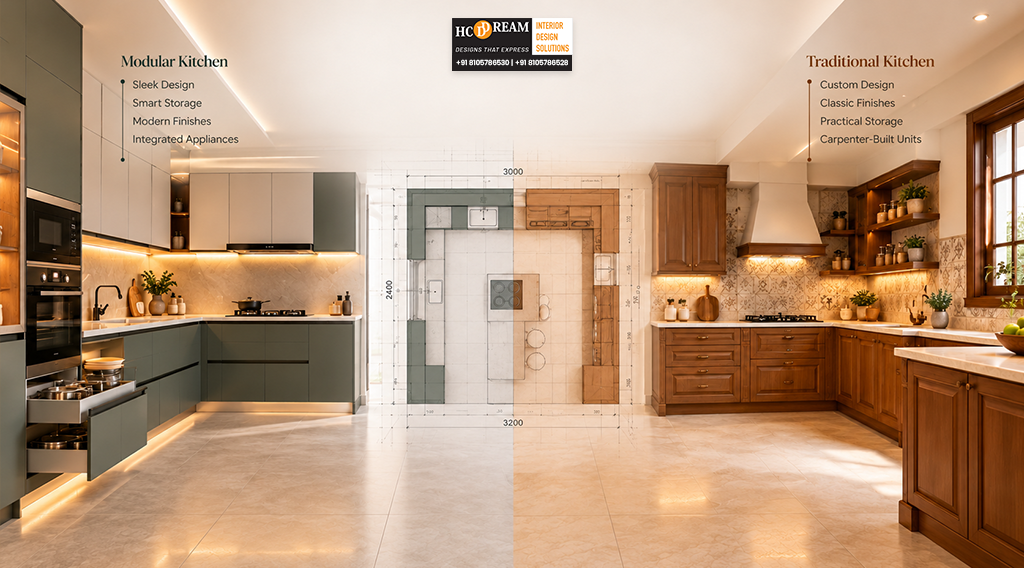
Your kitchen is more than a place to prepare meals. It is where busy mornings begin, family conversations happen and everyday routines come together.
But when planning a new kitchen, one important decision can influence its appearance, functionality, budget, and maintenance for years: should you choose a modular kitchen or a traditional kitchen?
Both options have their advantages. Modular kitchens offer organised storage, contemporary finishes and factory-manufactured components, while traditional kitchens provide flexibility in construction and can be adapted to different layouts and budgets.
For Bangalore homeowners, the right choice depends on available space, cooking habits, storage requirements and long-term expectations.
Let’s explore the differences between modular vs traditional kitchen designs to help you make an informed decision for your home.
What Is a Modular Kitchen?
A modular kitchen is designed using individual units or modules that are manufactured to fit together as a complete kitchen system.
These units are generally produced off-site and assembled at the property. They include cabinets, drawers, shelves and storage compartments designed for specific purposes.
The result is an organised kitchen where different components work together.
Key Features of Modular Kitchens
- Factory-manufactured cabinet units
- Organised drawers and internal storage
- Contemporary finishes and designs
- Integrated accessories and fittings
- Customisable cabinet configurations
- Relatively convenient replacement of individual modules
Modular kitchens are particularly popular in modern apartments because they can make efficient use of available space while creating a clean, coordinated appearance.
What Is a Traditional Kitchen?
A traditional kitchen is generally built or assembled at the site by carpenters and other skilled professionals.
Instead of relying entirely on factory-manufactured modules, cabinets and storage units are constructed according to the kitchen’s dimensions and requirements.
This approach allows considerable flexibility during construction.
Key Features of Traditional Kitchens
- On-site carpentry and installation
- Cabinets built around the available layout
- Flexible construction methods
- Customised storage dimensions
- A wider choice of construction approaches
- Greater dependence on workmanship and site supervision
Traditional kitchens can work well in homes with unusual layouts or specific construction requirements.
They are not necessarily old-fashioned. A traditional kitchen can also have a clean, contemporary appearance when designed thoughtfully.
Modular vs Traditional Kitchen: Understanding the Main Differences
Both kitchen styles can create beautiful and functional spaces, but their construction methods and practical considerations differ.
| Comparison | Modular Kitchen | Traditional Kitchen |
| Construction | Factory-manufactured units | Generally built on-site |
| Customisation | Customised module sizes and configurations | Flexible on-site construction |
| Installation | Usually quicker after site readiness | Depends on carpentry and site work |
| Storage | Organised accessories and modules | Depends on planned cabinet interiors |
| Repairs | Individual modules may be replaceable | Repairs depend on construction and materials |
| Finishes | Consistent factory-applied finishes | Depends on material and site workmanship |
| Design | Contemporary and adaptable | Can range from traditional to modern |
| Cost | Depends on materials, hardware and accessories | Depends on materials, labour and complexity |
Neither option is automatically better for every home. The important question is how well it supports your everyday cooking and storage requirements.
1. Design and Aesthetic Appeal
The kitchen is an important part of your home’s overall visual identity.
A modular kitchen often creates a streamlined appearance because cabinets, shutters, drawers and accessories are designed as part of one coordinated system.
You can choose from different colours, textures and finishes to complement your interiors.
Traditional kitchens offer flexibility in how cabinets and other elements are constructed. They can be designed with contemporary finishes, classic detailing or a combination of both.
Which Should You Choose?
Consider a modular kitchen if you prefer:
- Clean cabinet lines
- Coordinated finishes
- Integrated storage
- Contemporary styling
- A consistent overall appearance
Consider traditional construction if you want:
- Greater flexibility in unusual spaces
- Specific on-site modifications
- Custom construction details
- A design based on particular carpentry requirements
The appearance of either kitchen ultimately depends on the quality of design and execution.
2. Cost: Which Kitchen Is More Budget-Friendly?
Budget is often one of the biggest considerations when comparing modular and traditional kitchens.
However, it is difficult to declare one option universally cheaper.
The final cost depends on the kitchen’s dimensions, materials, hardware, accessories, finish selection, labour and installation requirements.
Modular Kitchen Costs
A modular kitchen may include costs for:
- Cabinet modules
- Shutters and finishes
- Drawers and internal accessories
- Hinges and drawer channels
- Countertop coordination
- Transportation and installation
Premium hardware, specialised finishes and additional accessories can increase the overall investment.
Traditional Kitchen Costs
Traditional kitchen construction may involve:
- Carcass materials
- Shutter materials
- Carpentry labour
- Hardware and fittings
- Finishing work
- On-site installation
The final amount can vary depending on workmanship, construction complexity and material selection.
How Should You Compare Quotes?
Do not compare kitchens based only on their headline prices.
Ask for a detailed breakdown covering:
- Cabinet materials and thickness
- Shutter finishes
- Hardware brands and specifications
- Drawer and storage accessories
- Countertop requirements
- Installation charges
- Warranty and service terms
A detailed comparison helps you understand what you are actually paying for.
3. Storage and Space Utilisation
Storage can determine whether a kitchen feels organised or constantly cluttered.
Modern Bangalore apartments often have carefully planned kitchen dimensions, making efficient use of available space particularly important.
Modular kitchens offer several accessories designed to organise everyday essentials.
These may include:
- Pull-out pantry units
- Corner storage systems
- Cutlery organisers
- Bottle pull-outs
- Drawer dividers
- Tall storage cabinets
- Under-sink organisers
Traditional kitchens can also provide excellent storage when the cabinets are planned carefully.
The difference is that storage accessories and internal arrangements may need to be designed and installed separately.
Which Offers Better Storage?
Both can work well.
Modular kitchens offer convenient access to specialised storage accessories, while traditional kitchens allow flexible cabinet construction according to specific requirements.
The best solution depends on what you need to store and how frequently you use it.
4. Customisation for Indian Cooking Needs
Indian cooking involves a variety of ingredients, utensils, appliances and preparation activities.
From pressure cookers and kadais to spice containers, large vessels, mixers and groceries, the kitchen needs to accommodate more than basic storage.
This is why customisation matters.
What Should an Indian Kitchen Include?
Consider planning for:
- Dedicated spice storage
- Large utensil drawers
- Deep cabinets for cookware
- Accessible pantry storage
- Mixer and appliance spaces
- Proper ventilation
- Convenient preparation counters
- Organised waste segregation
A modular kitchen can accommodate these requirements through customised modules and accessories.
A traditional kitchen can also be constructed around the same needs.
The key is to communicate your cooking habits during the design stage rather than trying to fit everything into the kitchen after installation.
5. Durability and Maintenance
A kitchen experiences regular exposure to heat, moisture, spills, cleaning products and frequent use.
The durability of either kitchen depends heavily on material selection, construction quality, installation and maintenance.
Modular Kitchen Maintenance
Individual components may be easier to access or replace, depending on the design and manufacturer.
However, homeowners should check the quality of cabinet materials, edge finishing, hardware and installation.
Traditional Kitchen Maintenance
Traditional kitchens can also last for many years when constructed using suitable materials and skilled workmanship.
Repairs may require on-site carpentry, particularly when cabinet dimensions or construction details are customised.
What Should You Check?
Before finalising either option, consider:
- Moisture suitability of cabinet materials
- Quality of edge finishing
- Hardware durability
- Ease of cleaning
- Protection around the sink
- Ventilation
- Warranty coverage
A well-maintained kitchen can serve your household comfortably for years, regardless of the construction approach.
6. Installation Time and Project Planning
Installation time can influence your overall home interior schedule, especially if you are moving into a new apartment.
Modular kitchen components are generally manufactured before reaching the site. Once the kitchen area is ready, the units can be assembled and installed.
Traditional kitchens involve more on-site construction, so the timeline depends on carpentry, finishing and coordination between different activities.
However, modular installation is not automatically immediate. Measurements, manufacturing, transportation, electrical work, plumbing and countertop installation all need to be coordinated.
What Can Affect the Timeline?
- Final design approval
- Material availability
- Manufacturing schedules
- Site readiness
- Electrical and plumbing work
- Countertop installation
- Hardware availability
- Changes during execution
A clear project schedule helps avoid unnecessary delays with either approach.
7. Making the Right Choice for Small Bangalore Kitchens
Many urban apartments have compact kitchens where every section needs to serve a purpose.
A thoughtful layout can improve storage, movement and convenience without increasing the available area.
Modular kitchens can be useful in these spaces because they offer coordinated cabinets, pull-out storage and accessories designed for specific functions.
Traditional construction can also work well when the kitchen has unusual dimensions, structural obstructions or requirements that need on-site adjustments.
Space-Saving Ideas for Both Kitchen Types
- Use vertical cabinet space.
- Plan corner storage carefully.
- Keep frequently used items accessible.
- Avoid oversized cabinets that obstruct movement.
- Include dedicated appliance spaces.
- Choose drawers suited to your cookware.
- Maintain sufficient preparation space.
The most successful kitchen is not necessarily the one with the most cabinets. It is the one where everything has a practical place.
8. Which Kitchen Is Easier to Repair or Upgrade?
Every kitchen may eventually need adjustments.
Drawer channels may require replacement, shutters may need refinishing and accessories may need servicing.
With modular kitchens, individual modules or hardware components may be replaceable without rebuilding the entire kitchen, depending on product availability and design.
Traditional kitchens can also be repaired or modified, but the work may require a carpenter to recreate or adjust the original construction.
Before selecting a kitchen system, ask about:
- Availability of replacement components
- Hardware warranty
- After-sales support
- Repair procedures
- Possibility of future upgrades
Thinking about maintenance before installation can save considerable inconvenience later.
How to Choose Between Modular and Traditional Kitchens
Instead of choosing based only on appearance or popularity, evaluate your actual requirements.
A Modular Kitchen May Suit You If:
- You prefer a contemporary, organised appearance.
- You want integrated storage accessories.
- You value coordinated factory finishes.
- You want individual modules that may be replaced.
- Your kitchen has dimensions suitable for modular planning.
A Traditional Kitchen May Suit You If:
- Your kitchen has unusual dimensions.
- You need specific on-site construction adjustments.
- You prefer a carpenter-led construction approach.
- Your design requires non-standard cabinet details.
- You have access to skilled workmanship and reliable supervision.
You can also consider combining both approaches where appropriate. The right design does not always have to follow one construction method exclusively.
What Should You Consider Before Starting Your Bangalore Kitchen Design?
Before finalising your kitchen, spend some time understanding your family’s routines.
Think about how many people cook, how frequently you prepare meals and which appliances you use regularly.
Also consider whether you need additional storage for groceries, whether multiple people use the kitchen simultaneously and how much countertop space you require.
A practical Bangalore kitchen design should account for:
- Available floor area
- Cooking habits
- Storage requirements
- Ventilation
- Electrical and plumbing points
- Material suitability
- Cleaning and maintenance
- Overall interior aesthetics
For homeowners exploring modular kitchen Bangalore options, comparing materials, hardware specifications and installation support is just as important as selecting the cabinet finish.
How HCD DREAM Interiors Can Help You Choose
Choosing between modular and traditional construction is only one part of creating a successful kitchen.
The layout, storage, materials, lighting, countertop, appliances and movement areas must all work together.
When looking for the Best Interior Design Company in Bangalore, consider a team that understands both the visual and practical aspects of kitchen planning.
The Best Interior Designer in Bangalore for your project should take time to understand your cooking habits, available space, storage needs and budget before recommending a design.
If you are searching for Interior Designers Near me Bangalore, evaluate the team’s ability to coordinate design, material selection, installation and complete project execution.
Homeowners looking for the Best Interior Designers in Whitefield Bangalore can also benefit from working with professionals experienced in contemporary apartments and villas.
At HCD DREAM Interiors, the approach focuses on creating kitchens that combine thoughtful planning, refined aesthetics and everyday functionality.
From selecting the right kitchen configuration to coordinating materials, storage and finishes, an end-to-end approach helps ensure that the kitchen feels connected to the rest of your home.
FAQs
1. What is a modular kitchen and how does it differ from a traditional kitchen?
A modular kitchen uses individual factory-manufactured units that are assembled at the site. A traditional kitchen is generally constructed on-site by carpenters. Both can be customised, but their construction, installation and repair processes differ.
2. Which kitchen style is more cost-effective for Bangalore homes?
Neither option is always cheaper. Costs depend on materials, hardware, accessories, labour, design complexity and installation. Compare detailed quotations rather than choosing based only on the initial price.
3. Can modular kitchens be customized to Indian cooking needs?
Yes. Modular kitchens can include deep drawers, spice organisers, large utensil storage, pantry units, appliance spaces and other accessories suited to Indian cooking requirements.
4. Are traditional kitchens better for durability and repairs?
Not necessarily. Durability depends on material quality, workmanship, installation and maintenance. Traditional kitchens can be durable, while modular kitchens may offer convenient replacement of individual components. Both require suitable materials and proper execution.
5. How long does it take to install a modular kitchen vs build a conventional one?
Modular kitchens are generally quicker to assemble once manufacturing and site preparation are complete. Traditional kitchens usually require more on-site carpentry and finishing. Actual timelines depend on design complexity, material availability, site readiness and installation coordination.
Ready to Design a Kitchen That Works for Your Home?
Your kitchen should reflect your cooking habits, complement your interiors and make everyday life more convenient.
Whether you prefer a contemporary modular kitchen or a customised traditional layout, HCD DREAM Interiors can help you explore the right solution for your Bangalore home.
From initial space planning and material selection to complete turnkey execution, every detail can be considered to create a kitchen that is beautiful, organised and practical.
Planning a new kitchen? Connect with HCD DREAM Interiors and let’s create a space designed around the way you cook and live.