

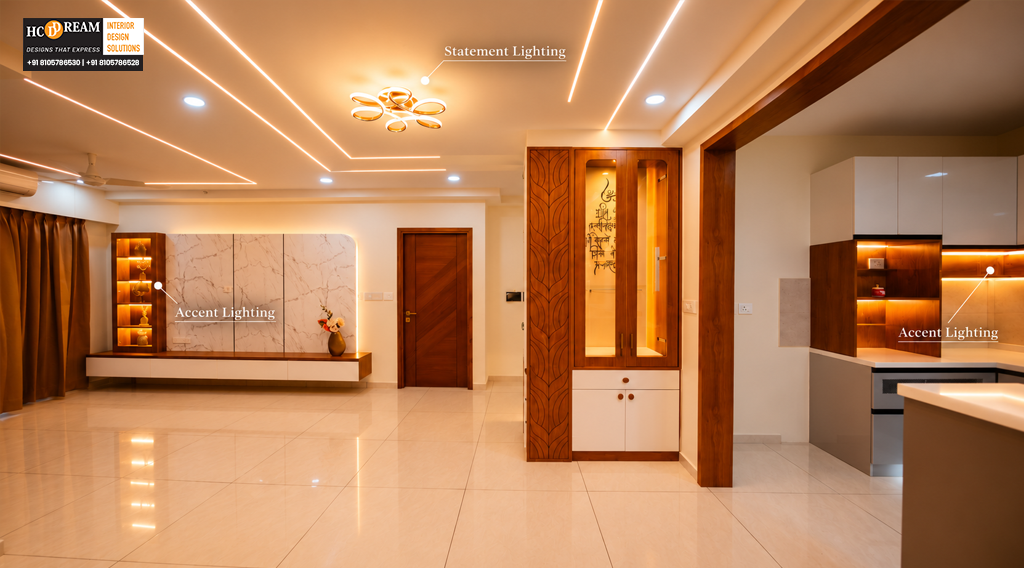
A beautifully designed room can feel ordinary under the wrong lighting. The same room can feel warm, spacious, and luxurious when the lighting is planned well.
That is the power of lighting. It influences how colours appear, how textures stand out, how spacious a room feels and how comfortable you feel within it.
For Bangalore homeowners, lighting is especially important when designing modern apartments and villas. The right combination of natural daylight, ambient illumination and carefully placed fixtures can transform everyday spaces without changing their layout or furniture.
Thoughtful home lighting design goes beyond choosing attractive light fixtures. It is about creating the right atmosphere for every activity, from waking up in a peaceful bedroom to entertaining guests in a welcoming living room.
Why Lighting Matters in Interior Design
Lighting affects both the appearance and functionality of a home.
A room with insufficient lighting may feel dull or cramped. Excessively bright lighting can make a relaxing space feel harsh. A carefully planned arrangement, however, can bring out the best in your furniture, materials and architectural details.
Good lighting can help you:
- Create a welcoming atmosphere
- Make smaller rooms feel more open
- Highlight textures and decorative features
- Improve visibility for everyday tasks
- Establish different moods throughout the day
- Make colours and finishes appear more balanced
- Add depth and character to interiors
Lighting should therefore be considered during the design process, not added as a finishing touch after everything else is complete.
1. Understand the Three Main Types of Lighting
A well-lit home rarely depends on a single ceiling fixture.
Instead, effective interior lighting ideas combine different types of lighting to support practical needs and create visual interest.
Ambient Lighting
Ambient lighting provides the general illumination for a room.
It helps you move around comfortably and creates the overall brightness of the space.
Common examples include ceiling lights, recessed downlights and suitable ceiling-mounted fixtures.
Task Lighting
Task lighting focuses on specific activities.
Examples include bedside reading lights, kitchen counter lighting, study lamps and lighting inside wardrobes.
It provides additional visibility where you need it most.
Accent Lighting
Accent lighting draws attention to selected features.
It can highlight artwork, textured walls, display shelves, architectural details or decorative objects.
When these three layers work together, a room feels more balanced and adaptable.
2. Use Natural Light to Open Up Your Home
Before choosing artificial lighting, consider how much natural light your home receives.
Daylight can make rooms feel brighter, more inviting and visually spacious. It also helps reveal the true character of materials and colours.
For Bangalore apartments, where room sizes and window positions vary, making the most of available daylight can have a significant impact.
Simple Ways to Maximise Natural Light
- Keep window areas as unobstructed as practical.
- Choose curtains that allow daylight when privacy permits.
- Position mirrors thoughtfully to reflect available light.
- Avoid placing bulky furniture directly in front of windows.
- Use lighter finishes where they complement the design.
- Consider how sunlight changes throughout the day.
Natural light should guide your artificial lighting plan, too. A room that receives generous daylight may need a different arrangement from one with limited windows.
3. Choose the Right Lighting for Your Living Room
The living room often serves several purposes throughout the day.
It may be a place for family conversations, entertaining guests, watching television, reading or simply relaxing after work.
That means the lighting needs to be flexible.
Create Layers for Different Activities
Consider combining:
- Ceiling lighting for general illumination
- Floor lamps for reading corners
- Wall lights for a softer atmosphere
- Accent lights to highlight artwork
- Dimmable fixtures where suitable
You do not need to turn on every light at once.
A combination of lighting options allows you to create a brighter setting for gatherings and a softer atmosphere for quiet evenings.
Avoid Overlighting
More light does not automatically make a room look better.
Too many bright fixtures can flatten the appearance of a space and make it feel uncomfortable.
A balanced arrangement allows some areas to stand out while others remain visually calm.
4. Design Bedroom Lighting for Comfort and Relaxation
The bedroom should feel different from a kitchen or work area.
It is a place to unwind, read, get dressed and prepare for rest. Lighting should support these activities without making the room feel overly bright or visually busy.
Create a Comfortable Lighting Arrangement
General lighting: Use suitable ceiling fixtures to illuminate the room evenly.
Bedside lighting: Wall-mounted reading lights or bedside lamps provide focused illumination without relying on the main ceiling light.
Wardrobe lighting: Integrated lighting can make it easier to locate clothing and accessories.
Accent lighting: Subtle illumination behind a headboard or around a selected architectural feature can add depth.
Choose Warm, Comfortable Light
Warmer light is often preferred in bedrooms because it creates a relaxed atmosphere.
The exact colour temperature should suit your finishes, personal preferences and lighting requirements.
Avoid relying on a single harsh light source. Multiple, appropriately positioned fixtures give you greater control over the mood of the room.
5. Make Small Rooms Feel Bigger With Lighting
Lighting can change how spacious a room appears, even though it does not change its physical dimensions.
Dark corners, uneven illumination and heavy shadows can make a space feel visually enclosed. A more balanced arrangement can help the room feel open and connected.
Try These Approaches
- Illuminate darker corners.
- Use wall lights to draw attention across a room.
- Combine ambient lighting with selected accent lights.
- Make the most of natural daylight.
- Choose fixtures that suit the room’s proportions.
- Avoid oversized fittings that overwhelm compact spaces.
In small bedrooms, well-positioned bedside wall lights can free up space on nightstands while creating a cleaner appearance.
In compact living rooms, lighting around shelving or selected wall features can add depth without introducing more furniture.
The goal is to create visual balance, not simply increase brightness.
6. Use Lighting to Highlight Materials and Textures
Materials can look dramatically different depending on how light falls across them.
Wood finishes may appear warmer under certain lighting. Textured walls can gain depth when illuminated from the side. Stone-inspired surfaces can reveal subtle patterns under carefully positioned fixtures.
This is why lighting should be planned alongside material selection.
Where Accent Lighting Can Make a Difference
Feature walls: Directional lighting can reveal surface texture.
Display shelves: Integrated lighting can make selected objects stand out.
Wall panels: Carefully positioned fixtures can create depth and shadow.
Artwork: Suitable accent lighting can draw attention to individual pieces.
The important thing is to highlight selected details rather than illuminate every surface equally.
7. Select Lighting for the Kitchen and Dining Area
Kitchen lighting needs to balance visibility with atmosphere.
A decorative pendant may look beautiful above an island, but it should not replace practical lighting over food preparation areas.
Kitchen Lighting
Consider a combination of:
- General ceiling lighting
- Under-cabinet task lighting
- Suitable lighting above work surfaces
- Pendant lights where appropriate
- Lighting inside selected cabinets
Task lighting is particularly useful because overhead fixtures can sometimes cast shadows on countertops when someone stands in front of them.
Dining Area Lighting
A pendant above the dining table can create a visual focal point and help define the dining zone.
Choose a fixture that suits the table’s size and the room’s proportions. The light should provide comfortable illumination without obstructing views or creating glare.
For open-plan homes, a distinct dining light can help separate the dining area visually from the living room without adding a physical partition.
8. Choose Light Fixtures That Complement Your Interiors
Light fixtures are functional elements, but they also contribute to the overall design.
A sculptural pendant can become a focal point. Minimal recessed lighting can preserve a clean ceiling. Wall sconces can add character to a bedroom or hallway.
The right choice depends on the room, the ceiling height and the visual style of the home.
Consider These Factors
- Room size
- Ceiling height
- Furniture proportions
- Existing finishes
- Light output
- Glare control
- Ease of cleaning
- Energy efficiency
Avoid choosing a fixture based only on its appearance in a catalogue.
Consider how it will look when installed and whether it will provide the illumination the room actually needs.
9. Think About Lighting Controls and Flexibility
Different activities require different lighting levels.
You may prefer brighter lighting while cleaning or working, but a softer setting while watching television or relaxing before bed.
Where appropriate, dimmers and separate switching circuits can make a home more flexible.
Plan Controls Around Daily Routines
- Place bedroom switches where they are convenient to reach.
- Provide independent control for selected lighting layers.
- Consider dimmable fixtures where compatible.
- Plan controls for bedside and wardrobe lighting.
- Group lights according to how the room is used.
Lighting controls are easiest to plan before electrical work is completed.
A little attention at this stage can make everyday use considerably more convenient.
10. Avoid Common Home Lighting Mistakes
Even attractive fixtures can produce disappointing results when the overall lighting plan is overlooked.
Relying on One Ceiling Light
A single fixture may leave corners dark and provide insufficient illumination for specific activities.
Choosing Fixtures Without Considering Scale
A large chandelier can overwhelm a compact room, while a small fixture may look lost in a spacious living area.
Ignoring Natural Light
Artificial lighting should complement the daylight available in the room.
Using the Same Light Everywhere
Bedrooms, kitchens, bathrooms and living rooms have different requirements.
Forgetting Maintenance
Fixtures that are difficult to reach or clean can become inconvenient over time.
Leaving Electrical Planning Until the End
Late decisions can lead to awkward switch positions, visible cables and unnecessary changes during execution.
How to Plan Lighting for Bangalore Homes
Modern Bangalore homes often combine compact layouts, open-plan living areas, dedicated workspaces and carefully planned storage.
A good lighting strategy should respond to these practical requirements.
For example, a compact apartment may benefit from visually unobtrusive fixtures and layered lighting that helps different areas feel distinct.
A villa may allow more opportunities for feature lighting, decorative pendants and lighting that connects indoor spaces with outdoor areas.
In either case, consider lighting alongside furniture placement, material finishes and the way each room will be used.
How HCD DREAM Interiors Can Help
Thoughtful lighting requires more than selecting attractive fixtures. It involves understanding the space, identifying its practical needs and coordinating illumination with the rest of the interior design.
Homeowners searching for the Best Interior Design Company in Bangalore should look for a team that considers lighting during the early planning stages.
When evaluating the Best Interior Designer in Bangalore, ask how lighting will support different activities, highlight materials and complement the overall design.
If you are searching for Interior Designers Near me Bangalore, consider the team’s ability to coordinate lighting layouts with electrical planning, cabinetry and turnkey execution.
Homeowners exploring the Best Interior Designers in Whitefield Bangalore can also look for professionals familiar with contemporary apartment layouts and modern lighting requirements.
At HCD DREAM Interiors, lighting can be considered as part of the complete design journey, from initial planning and material selection to final execution. This integrated approach helps ensure that fixtures, furniture, finishes and architectural details work together.
The goal is to create a home that feels beautiful in daylight, welcoming in the evening and practical throughout the day.
FAQs
1. Why is lighting important in interior design?
Lighting influences how colours, textures, furniture and room proportions appear. It also supports everyday activities and helps establish the atmosphere of each space.
2. Which lighting works best for living rooms?
A combination of ambient, task and accent lighting usually provides the greatest flexibility. Ceiling lights, floor lamps, wall lights and selected accent fixtures can support different activities and moods.
3. How can lighting make rooms look bigger?
Balanced illumination can reduce dark corners and harsh shadows, helping a room feel more open. Natural light, appropriately placed wall lights and well-scaled fixtures can contribute to this effect.
4. What are the different types of lighting?
The three main types are ambient lighting for general illumination, task lighting for specific activities and accent lighting to highlight selected features.
5. How do I choose the right lighting fixtures?
Consider the room’s size, ceiling height, purpose, existing finishes, required brightness, glare control and maintenance needs. Choose fixtures that complement the interiors while providing suitable illumination.
Transform Your Home With Thoughtful Lighting
Your home deserves lighting that does more than brighten a room. It should enhance the design, support your routines and create the right atmosphere throughout the day.
Whether you are planning a new apartment, redesigning your bedroom or upgrading your complete home interiors, HCD DREAM Interiors can help you bring together lighting, materials, layouts and finishes into one cohesive design.
Ready to see your home in a new light? Connect with HCD DREAM Interiors and start planning a beautifully illuminated home in Bangalore.