

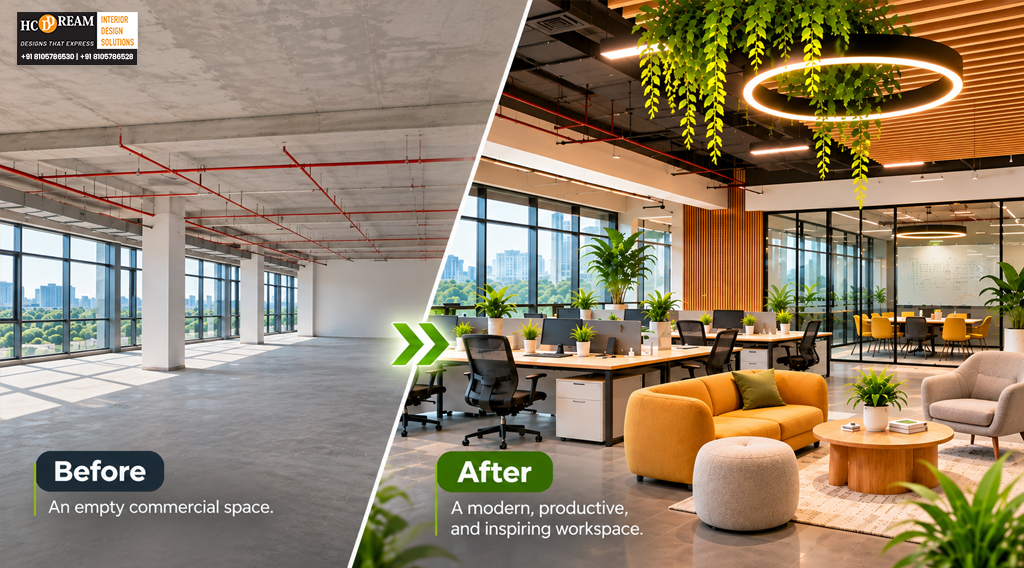
A startup office should do more than provide desks and chairs. It should inspire people to think creatively, collaborate confidently and feel comfortable throughout the workday.
For Bangalore startups, where teams often work in fast-paced environments and office spaces come at a premium, thoughtful interior design can make a significant difference. The right layout, lighting, furniture and colours can turn even a compact office into a productive and welcoming workplace.
Whether you are setting up your first office in Whitefield, Koramangala, Indiranagar or another part of Bangalore, the goal is to create a space that reflects your company’s personality while supporting the people who work there.
Let’s explore practical office interior design ideas that balance productivity, comfort and style.
1. Start with a Layout That Supports the Way Your Team Works
Before selecting furniture or choosing wall colours, understand how your team uses the office. A startup with five employees may need a very different layout from a growing company with 30 people.
An effective Bangalore office design should make movement easy, provide enough personal space and support different working styles.
Choose an Open Layout for Better Collaboration
Open office layouts are popular among startups because they encourage communication and make smaller spaces feel more spacious.
Consider incorporating:
- Shared workstations for teams that collaborate frequently.
- Open discussion areas for quick meetings.
- Comfortable seating corners for informal conversations.
- Clear pathways between desks and common areas.
However, an entirely open layout may not work for everyone. Employees who handle detailed tasks, attend frequent calls or need quiet time may find constant activity distracting.
Create Dedicated Zones for Different Activities
Instead of treating the entire office as one large workspace, divide it into functional zones.
For example:
- Focus zone: A quiet area for individual tasks and concentrated work.
- Collaboration zone: A shared space for brainstorming and team discussions.
- Meeting zone: A dedicated area for client calls, presentations and internal meetings.
- Breakout zone: A relaxed corner where employees can recharge.
- Reception zone: A welcoming entrance that introduces visitors to your brand.
Even in a small office, these zones can be created through furniture placement, lighting, partitions and subtle changes in flooring or wall finishes.
2. Invest in Ergonomic Furniture for Everyday Comfort
Employees spend a significant part of their day sitting, working on screens and attending meetings. Uncomfortable furniture can make long working hours tiring and affect the overall workplace experience.
Good startup office interiors should prioritise comfort without compromising aesthetics.
Choose the Right Office Chairs and Desks
Ergonomic furniture supports better posture and makes everyday work more comfortable.
Look for:
- Adjustable chairs with proper back support.
- Desks with sufficient space for laptops, monitors and accessories.
- Chairs with adjustable height and armrests.
- Footrests where needed.
- Desks positioned at a comfortable working height.
If your startup has limited space, consider compact desks with integrated storage. They help keep the workspace organised without making it feel crowded.
Explore Flexible and Multi-Functional Furniture
Startups often experience changes in team size, work requirements and office arrangements. Furniture that can adapt to these changes is a practical investment.
Some useful options include:
- Modular workstations that can be rearranged.
- Foldable tables for flexible meeting spaces.
- Storage benches that double as seating.
- Mobile drawers and cabinets.
- Adjustable desks for different working preferences.
The idea is to create a workplace that can evolve as your business grows.
3. Use Colours That Reflect Your Brand and Improve the Atmosphere
Colour influences how a workspace looks and feels. A carefully selected palette can make an office appear more professional, energetic, calm or creative.
For startups, colour is also an opportunity to communicate brand personality through interior design.
Select a Balanced Colour Palette
Different colours can create different visual experiences.
- White and beige: Make compact offices feel brighter and more open.
- Blue: Creates a calm, professional atmosphere.
- Green: Introduces a natural element and works beautifully with indoor plants.
- Yellow: Adds warmth and energy when used in moderation.
- Grey: Offers a contemporary and understated foundation.
Avoid using too many strong colours across the same space. A balanced combination of neutral shades and selected brand colours usually creates a more cohesive result.
Bring Your Brand Identity into the Interiors
Your office should feel like an extension of your company.
Consider incorporating your brand identity through:
- A statement wall featuring your company logo.
- Brand colours in selected furniture or upholstery.
- Custom wall graphics or typography.
- Reception signage.
- Framed company milestones and achievements.
- Subtle branding in meeting rooms and collaborative areas.
The key is to make branding feel intentional rather than overwhelming. A thoughtfully designed logo wall or reception area can create a memorable first impression without distracting employees from their work.
4. Plan Office Lighting to Reduce Eye Strain
Lighting has a direct influence on how comfortable a workspace feels. Poor lighting can create glare, shadows and visual discomfort, especially for employees who spend several hours working on computers.
A well-designed office should combine natural light with carefully planned artificial lighting.
Make the Most of Natural Light
If your office has windows, use them strategically.
- Position workstations where employees can benefit from daylight without facing direct glare.
- Use blinds or curtains to control harsh sunlight.
- Keep window areas visually open.
- Choose lighter wall colours to help distribute natural light.
Natural light can make an office feel more welcoming and connected to the outdoors.
Combine Different Types of Artificial Lighting
A single overhead light may not provide enough illumination for every activity. Instead, consider layering different lighting options.
Ambient lighting: Provides general illumination across the office. Recessed ceiling lights and well-positioned panel lights are common choices.
Task lighting: Supports specific activities such as reading, writing and detailed work. Desk lamps can provide additional light where required.
Accent lighting: Highlights selected design features, such as a brand wall, reception backdrop or display shelves.
Choose lighting that provides comfortable, even illumination. Position computer screens to minimise reflections, and use adjustable task lights when employees need additional brightness.
5. Create Comfortable Breakout Spaces That Encourage Fresh Thinking
An office should not feel like a place where employees spend the entire day sitting at their desks. Short breaks, informal conversations and a change of environment can make the workday more enjoyable.
A dedicated breakout area gives employees a comfortable place to step away from their screens.
Design a Relaxed and Welcoming Corner
You do not need a large lounge to create a pleasant break area. Even a small corner can be transformed with a few thoughtful elements.
Consider adding:
- A compact sofa or comfortable lounge chairs.
- A small coffee table.
- Indoor plants.
- Warm lighting.
- A simple bookshelf or display shelf.
- A coffee or refreshment counter.
Choose materials and colours that create a softer atmosphere than the main workstation area.
Encourage Informal Collaboration
Some of the best workplace conversations happen outside formal meetings.
A relaxed seating arrangement can encourage employees to exchange ideas, discuss challenges and connect with colleagues. For startups, these informal interactions can help build a stronger team culture.
6. Add Smart Storage to Keep the Office Organised
Cluttered workspaces can make even a beautifully designed office feel uncomfortable. Files, cables, stationery and equipment need dedicated storage to keep the environment clean and functional.
This is especially important for startups working from compact commercial spaces in Bangalore.
Make Use of Vertical and Hidden Storage
Instead of filling the office with bulky cabinets, use available wall and under-desk space.
Practical workplace interior ideas include:
- Full-height storage cabinets.
- Wall-mounted shelves.
- Under-desk drawers.
- Concealed cable management.
- Storage units integrated into workstations.
- Compact cabinets near meeting rooms.
Keep frequently used items within easy reach and store less-used equipment in designated areas.
Plan Storage Around Daily Activities
Different teams have different storage requirements. An administration team may need filing cabinets, while a creative team may require shelves for samples, equipment and presentation materials.
Planning storage around actual work habits helps maintain an organised environment without wasting valuable floor space.
7. Bring Nature Indoors with Biophilic Design
A workplace filled with hard surfaces, screens and artificial lighting can sometimes feel disconnected from the outside world. Adding natural elements can make the environment feel warmer and more inviting.
Biophilic design introduces nature into interiors through plants, natural materials, daylight and organic textures.
Add Indoor Plants to Improve Visual Appeal
Plants are one of the simplest ways to introduce natural elements into office interiors.
Some suitable options include:
- Snake plants.
- Money plants.
- ZZ plants.
- Areca palms.
- Peace lilies, where suitable lighting and maintenance are available.
Place plants near windows, in reception areas, beside workstations or in breakout spaces. Choose varieties according to available daylight and maintenance requirements.
Use Natural Materials and Textures
You can create a more balanced workplace by incorporating:
- Wooden furniture or finishes.
- Stone-inspired surfaces.
- Natural fabric upholstery.
- Neutral wall textures.
- Warm, earthy colour combinations.
These materials add visual warmth and prevent the office from feeling overly industrial or sterile.
8. Design Meeting Rooms That Encourage Better Communication
Meeting rooms are essential for discussions, client presentations, interviews and team planning. However, they should be designed according to the actual needs of the business.
A small startup may not require several large conference rooms. A flexible meeting space can serve multiple purposes.
Make Meeting Rooms Functional and Comfortable
Consider including:
- A table sized according to the number of users.
- Comfortable chairs with adequate back support.
- A display screen for presentations.
- Sufficient power outlets.
- Video conferencing equipment.
- Suitable lighting.
- Acoustic treatment where necessary.
Glass partitions can make meeting rooms feel visually connected to the rest of the office. If privacy is important, frosted glass or blinds can provide additional separation.
Consider Acoustic Comfort
Noise can be distracting, particularly in open-plan offices.
Soft furnishings, acoustic panels, fabric partitions and rugs can help manage sound in selected areas. These features are especially useful in meeting rooms and spaces where employees regularly attend online calls.
9. Make Small Office Spaces Feel Bigger and More Efficient
Office rent and commercial space availability can influence how Bangalore startups plan their workplaces. A compact office does not have to feel restrictive.
With thoughtful planning, even a small floor area can accommodate workstations, storage, meeting spaces and comfortable common areas.
Use These Space-Saving Design Strategies
- Choose compact furniture: Select desks and chairs that provide comfort without occupying unnecessary floor space.
- Use glass partitions: They help maintain visual openness while creating separate functional areas.
- Maximise vertical space: Install shelves and tall storage units instead of spreading everything across the floor.
- Choose lighter colours: Soft neutrals can make a compact workspace feel brighter.
- Keep pathways clear: Avoid placing furniture where it interrupts movement.
- Use multi-purpose furniture: Select pieces that serve more than one function.
Mirrors can also help reflect light and create a greater sense of openness when placed thoughtfully.
10. Plan for Future Growth, Not Just Your Current Team
One of the biggest mistakes startups make is designing an office only for their present requirements.
A team that begins with eight employees may grow to 20 or more within a few years. Office interiors should allow for this possibility wherever practical.
Choose Flexible Design Solutions
Think about how your office might change as the business develops.
- Can additional workstations be added?
- Can the meeting room accommodate different activities?
- Is there enough storage for future equipment?
- Can furniture be rearranged without major renovation?
- Are electrical points and data connections planned for future needs?
A flexible design approach can reduce the need for frequent changes and help your office remain functional as your company grows.
Why Professional Office Interior Design Matters for Bangalore Startups
Designing a startup office involves more than choosing attractive furniture and wall colours. Every element needs to work together, from space planning and lighting to storage, materials and electrical requirements.
A professional interior design team can help you make informed decisions, avoid inefficient layouts and create a cohesive workplace.
When evaluating the Best Interior Design Company in Bangalore, look for a team that understands how businesses operate and can translate practical requirements into thoughtful interiors.
You may also consider these factors:
- Experience in planning commercial and office spaces.
- Ability to optimise compact layouts.
- Knowledge of durable and easy-to-maintain materials.
- Attention to lighting, ventilation and storage.
- Transparent communication and project planning.
- End-to-end design and execution capabilities.
If you are searching for the Best Interior Designer in Bangalore, prioritise practical expertise alongside visual creativity. The right team should understand your work culture, brand identity, employee requirements and future plans.
Similarly, searching for Interior Designers Near me Bangalore can help you identify professionals who understand local design preferences and project requirements. Businesses in Whitefield can also explore the Best Interior Designers in Whitefield Bangalore when planning a new office or upgrading an existing workspace.
At HCD DREAM Interiors, thoughtful space planning, material selection and design execution come together to create environments that feel welcoming, functional and visually balanced.
FAQs
1. How can I design a small office for my Bangalore startup?
Start by understanding your team’s daily activities and space requirements. Choose compact workstations, use vertical storage and create clearly defined zones for focused work, meetings and relaxation. Glass partitions, light colours and multi-functional furniture can help make a small office feel more spacious.
2. What furniture and layouts boost productivity in workspaces?
Ergonomic chairs, appropriately sized desks and flexible workstations support everyday comfort. Open layouts can encourage collaboration, while dedicated quiet areas help employees concentrate. Meeting tables, breakout seating and organised storage also contribute to a functional workplace.
3. How to incorporate branding and colour schemes in office design?
Use your brand colours selectively through reception walls, signage, furniture accents and wall graphics. Choose a complementary neutral palette to maintain visual balance. A logo wall or branded meeting room can communicate your company’s identity without making the office feel overcrowded.
4. What office lighting is ideal for reducing eye strain?
A combination of natural light, ambient lighting and task lighting works well for most office environments. Use evenly distributed ceiling lights, adjustable desk lamps and window coverings to manage glare. Position computer screens carefully to reduce reflections and visual discomfort.
5. Can home office design trends be applied to small startups?
Yes. Several home office design ideas work well in compact startup spaces. Ergonomic furniture, warm lighting, indoor plants, organised storage and neutral colour palettes can create a comfortable workplace. The key is adapting these elements to suit shared workstations, team collaboration and business requirements.
Create a Workplace That Helps Your Startup Grow
Your office is more than a business address. It is where ideas develop, teams collaborate and your company’s culture takes shape.
Thoughtful office interior design can make everyday work more comfortable while creating a professional environment that reflects your brand. From compact workstations and flexible meeting rooms to natural lighting and welcoming breakout spaces, every detail contributes to the overall experience.
At HCD DREAM Interiors, we believe great design begins with understanding how people use a space. Our team creates thoughtfully planned interiors that balance functionality, aesthetics and everyday comfort.
Planning a new startup office or looking to transform your existing workspace in Bangalore?
Connect with HCD DREAM Interiors to discuss your requirements and explore design solutions that bring your workplace vision to life.