

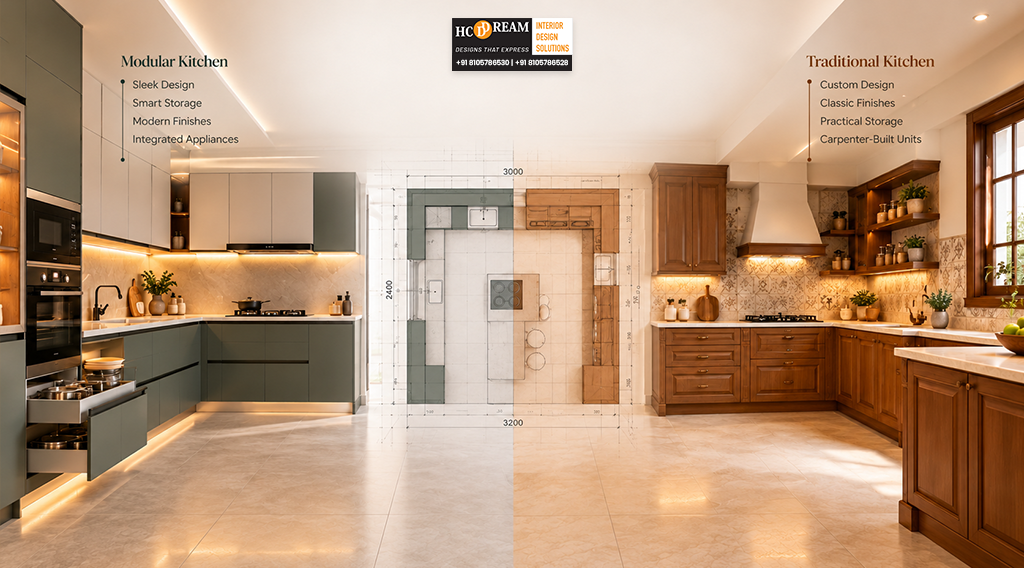
Modular vs Traditional Kitchens in Bangalore: Which Design Suits Your Home?
Your kitchen is more than a place to prepare meals. It is where busy mornings begin, family conversations happen and everyday routines come together. But when planning a new kitchen, one important decision can influence its appearance, functionality, budget, and maintenance for years: should you choose a modular kitchen or a traditional kitchen? Both options have their advantages. Modular kitchens offer organised storage, contemporary finishes and factory-manufactured components, while traditional kitchens provide flexibility in construction and can be adapted to different layouts and budgets. For Bangalore homeowners, the right choice depends on available space, cooking habits, storage requirements and long-term expectations. Let’s explore the differences between modular vs traditional kitchen designs to help you make an informed decision for your home. What Is a Modular Kitchen? A modular kitchen is designed using individual units or modules that are manufactured to fit together as a complete kitchen system. These units are generally produced off-site and assembled at the property. They include cabinets, drawers, shelves and storage compartments designed for specific purposes. The result is an organised kitchen where different components work together. Key Features of Modular Kitchens Modular kitchens are particularly popular in modern apartments because they can make efficient use of available space while creating a clean, coordinated appearance. What Is a Traditional Kitchen? A traditional kitchen is generally built or assembled at the site by carpenters and other skilled professionals. Instead of relying entirely on factory-manufactured modules, cabinets and storage units are constructed according to the kitchen’s dimensions and requirements. This approach allows considerable flexibility during construction. Key Features of Traditional Kitchens Traditional kitchens can work well in homes with unusual layouts or specific construction requirements. They are not necessarily old-fashioned. A traditional kitchen can also have a clean, contemporary appearance when designed thoughtfully. Modular vs Traditional Kitchen: Understanding the Main Differences Both kitchen styles can create beautiful and functional spaces, but their construction methods and practical considerations differ. Comparison Modular Kitchen Traditional Kitchen Construction Factory-manufactured units Generally built on-site Customisation Customised module sizes and configurations Flexible on-site construction Installation Usually quicker after site readiness Depends on carpentry and site work Storage Organised accessories and modules Depends on planned cabinet interiors Repairs Individual modules may be replaceable Repairs depend on construction and materials Finishes Consistent factory-applied finishes Depends on material and site workmanship Design Contemporary and adaptable Can range from traditional to modern Cost Depends on materials, hardware and accessories Depends on materials, labour and complexity Neither option is automatically better for every home. The important question is how well it supports your everyday cooking and storage requirements. 1. Design and Aesthetic Appeal The kitchen is an important part of your home’s overall visual identity. A modular kitchen often creates a streamlined appearance because cabinets, shutters, drawers and accessories are designed as part of one coordinated system. You can choose from different colours, textures and finishes to complement your interiors. Traditional kitchens offer flexibility in how cabinets and other elements are constructed. They can be designed with contemporary finishes, classic detailing or a combination of both. Which Should You Choose? Consider a modular kitchen if you prefer: Consider traditional construction if you want: The appearance of either kitchen ultimately depends on the quality of design and execution. 2. Cost: Which Kitchen Is More Budget-Friendly? Budget is often one of the biggest considerations when comparing modular and traditional kitchens. However, it is difficult to declare one option universally cheaper. The final cost depends on the kitchen’s dimensions, materials, hardware, accessories, finish selection, labour and installation requirements. Modular Kitchen Costs A modular kitchen may include costs for: Premium hardware, specialised finishes and additional accessories can increase the overall investment. Traditional Kitchen Costs Traditional kitchen construction may involve: The final amount can vary depending on workmanship, construction complexity and material selection. How Should You Compare Quotes? Do not compare kitchens based only on their headline prices. Ask for a detailed breakdown covering: A detailed comparison helps you understand what you are actually paying for. 3. Storage and Space Utilisation Storage can determine whether a kitchen feels organised or constantly cluttered. Modern Bangalore apartments often have carefully planned kitchen dimensions, making efficient use of available space particularly important. Modular kitchens offer several accessories designed to organise everyday essentials. These may include: Traditional kitchens can also provide excellent storage when the cabinets are planned carefully. The difference is that storage accessories and internal arrangements may need to be designed and installed separately. Which Offers Better Storage? Both can work well. Modular kitchens offer convenient access to specialised storage accessories, while traditional kitchens allow flexible cabinet construction according to specific requirements. The best solution depends on what you need to store and how frequently you use it. 4. Customisation for Indian Cooking Needs Indian cooking involves a variety of ingredients, utensils, appliances and preparation activities. From pressure cookers and kadais to spice containers, large vessels, mixers and groceries, the kitchen needs to accommodate more than basic storage. This is why customisation matters. What Should an Indian Kitchen Include? Consider planning for: A modular kitchen can accommodate these requirements through customised modules and accessories. A traditional kitchen can also be constructed around the same needs. The key is to communicate your cooking habits during the design stage rather than trying to fit everything into the kitchen after installation. 5. Durability and Maintenance A kitchen experiences regular exposure to heat, moisture, spills, cleaning products and frequent use. The durability of either kitchen depends heavily on material selection, construction quality, installation and maintenance. Modular Kitchen Maintenance Individual components may be easier to access or replace, depending on the design and manufacturer. However, homeowners should check the quality of cabinet materials, edge finishing, hardware and installation. Traditional Kitchen Maintenance Traditional kitchens can also last for many years when constructed using suitable materials and skilled workmanship. Repairs may require on-site carpentry, particularly when cabinet dimensions or construction details are customised. What Should You Check? Before finalising either option, consider: A well-maintained kitchen can serve your household comfortably for years,
