

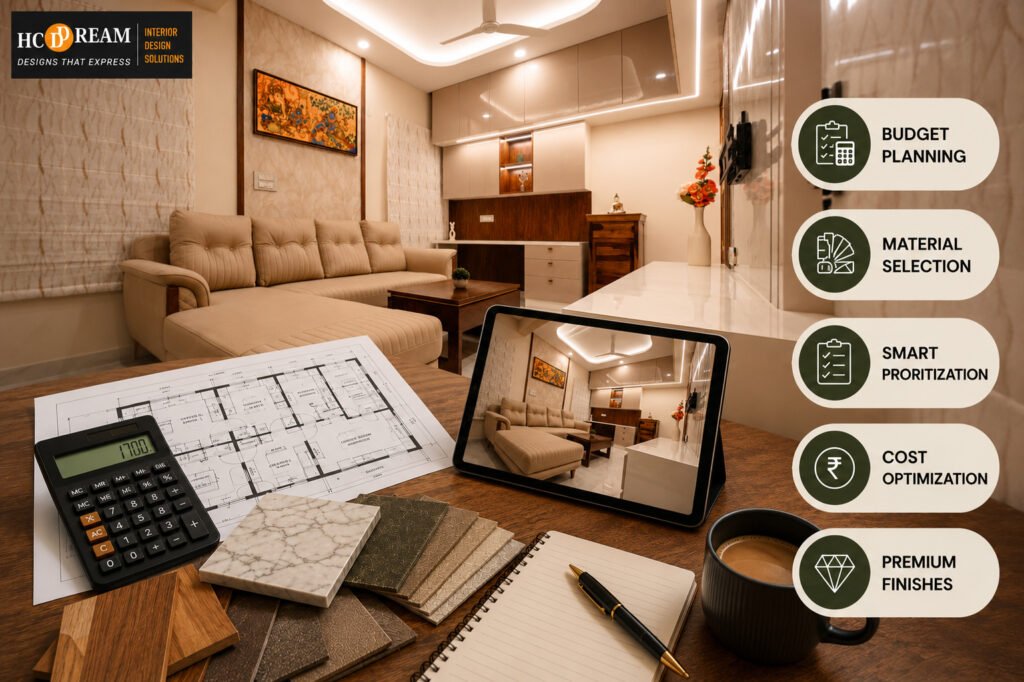
Designing your dream home is one of life’s most exciting milestones. From selecting the perfect color palette to choosing furniture, lighting, and finishes, every decision contributes to creating a space that reflects your personality. However, one factor influences every design choice… your budget.
Many homeowners believe they have to choose between affordability and quality. In reality, a well-planned interior design budget allows you to achieve both. With thoughtful planning, strategic investments, and expert guidance, it is possible to create elegant, functional interiors without overspending.
At HCD DREAM Interiors, we have helped homeowners across Bangalore transform their homes through smart home interior budget planning. As the Best Interior Design Company in Bangalore, we understand how to maximize value while maintaining premium quality and timeless design.
In this guide, we’ll show you how to plan your interior design budget wisely, avoid common financial mistakes, and invest in the features that matter most.
Why Interior Budget Planning Matters
Many homeowners begin their interior journey with only a rough estimate of costs. Unfortunately, this often leads to unexpected expenses, project delays, and compromises in quality.
A structured budget helps you:
- Set realistic expectations.
- Prioritize essential requirements.
- Avoid unnecessary spending.
- Maintain design consistency.
- Complete the project on schedule.
Proper planning ensures that every investment contributes to creating a beautiful and functional home.
Step 1: Define Your Overall Budget
The first step is understanding how much you are comfortable investing in your home interiors.
Your budget should consider:
- Home size
- Lifestyle needs
- Level of customization
- Material preferences
- Long-term goals
Rather than focusing only on the lowest possible cost, think about the value your investment will bring over many years.
Professional consultation with the Best Interior Designer in Bangalore helps establish a realistic budget based on your goals.
Step 2: Prioritize Essential Spaces
Not every room requires the same level of investment.
Start by identifying the spaces that will have the greatest impact on your daily life.
Typically, homeowners prioritize:
- Living room
- Kitchen
- Master bedroom
- Wardrobes
- Bathrooms
Secondary areas such as guest bedrooms or utility spaces can often be completed in later phases if required.
This approach keeps the project manageable while maintaining quality in the most important spaces.
Step 3: Separate Needs from Wants
One of the biggest budgeting mistakes is treating every design feature as equally important.
Instead, categorize items into:
Essential Requirements
- Modular kitchen
- Wardrobes
- Lighting
- Storage
- Electrical upgrades
Lifestyle Enhancements
- Decorative wall panels
- Designer lighting
- Premium décor
- Luxury finishes
This helps allocate funds more effectively.
Step 4: Invest in Quality Where It Matters Most
Some elements of your home are used every day and should never be compromised.
These include:
- Kitchen hardware
- Wardrobe fittings
- Countertops
- Hinges
- Electrical accessories
High-quality components last longer, require less maintenance, and provide better long-term value.
Saving money on these essentials often results in higher replacement costs later.
Step 5: Choose Materials Wisely
Premium interiors do not always require the most expensive materials.
Experienced designers help homeowners choose alternatives that offer excellent aesthetics and durability within budget.
Popular options include:
- High-quality laminates
- Engineered stone
- Quartz countertops
- Premium plywood
- Durable paint finishes
Selecting the right combination of materials is one of the smartest ways to optimize an interior design budget.
Step 6: Plan Storage Early
Storage is one of the most overlooked budget considerations.
Adding storage after the project is completed is often more expensive than incorporating it during the design stage.
Plan storage for:
- Bedrooms
- Kitchen
- Living room
- Utility area
- Entryway
Customized storage improves functionality while reducing future expenses.
Step 7: Avoid Frequent Design Changes
One of the biggest reasons interior budgets increase is repeated design modifications during execution.
Changing layouts, finishes, or furniture midway often results in:
- Additional labor costs
- Material wastage
- Delayed timelines
Spend enough time finalizing the design before execution begins.
Step 8: Create a Room-by-Room Budget
Breaking your project into individual spaces makes budgeting easier.
For example:
Living Room
Furniture, lighting, TV unit, décor.
Kitchen
Cabinets, countertops, hardware, appliances.
Bedrooms
Wardrobes, beds, lighting, storage.
Bathrooms
Vanity units, mirrors, accessories.
This structured approach keeps spending organized.
Step 9: Include a Contingency Fund
Even well-planned projects may encounter unexpected expenses.
Allocate approximately 5–10% of your overall budget for:
- Design modifications
- Material price changes
- Additional electrical work
- Site adjustments
A contingency fund prevents financial stress later.
Step 10: Choose Turnkey Interior Solutions
Managing multiple contractors independently often leads to budget overruns.
Turnkey interior services provide:
- One quotation
- Better coordination
- Controlled material selection
- Efficient execution
- Transparent communication
Working with the Best Interior Design Company in Bangalore simplifies budgeting and minimizes unexpected costs.
Factors That Influence Interior Design Costs
Several factors affect the final investment required for a home interior project.
These include:
Home Size
Larger homes require more materials and labor.
Customization
Customized furniture and storage increase personalization but also influence cost.
Material Selection
Premium finishes naturally require higher investment than standard materials.
Design Complexity
False ceilings, wall paneling, and specialty lighting add to the overall budget.
Project Timeline
Urgent execution schedules may increase labor costs.
Understanding these variables helps homeowners make informed decisions.
Smart Ways to Save Without Compromising Quality
Saving money does not always mean choosing cheaper products.
Instead, focus on making better decisions.
Practical strategies include:
- Invest in timeless designs.
- Select durable materials.
- Avoid unnecessary decorative elements.
- Prioritize functionality.
- Choose versatile furniture.
- Plan the entire project before execution.
Professional guidance helps identify areas where savings are possible without sacrificing quality.
Common Budgeting Mistakes Homeowners Make
Avoid these common errors:
- Starting without a clear budget.
- Ignoring storage planning.
- Choosing materials only by appearance.
- Frequently changing design decisions.
- Underestimating installation costs.
- Forgetting contingency expenses.
Preventing these mistakes protects both your budget and your project timeline.
Why Professional Interior Designers Save Money
Many homeowners assume hiring an interior designer increases costs.
In reality, experienced designers often reduce unnecessary spending by:
- Preventing costly mistakes.
- Optimizing material usage.
- Managing vendors efficiently.
- Improving space planning.
- Recommending cost-effective alternatives.
Their expertise often results in better value for the overall investment.
Why HCD DREAM Interiors Is the Right Partner
At HCD DREAM Interiors, every project begins with understanding the homeowner’s goals, lifestyle, and financial expectations.
Our approach includes:
- Personalized design consultation.
- Transparent budgeting.
- Smart material selection.
- Customized storage planning.
- End-to-end turnkey execution.
As one of the Best Interior Designers in Whitefield Bangalore, we create elegant interiors that balance quality, functionality, and affordability.
FAQs
1. How much should I budget for home interiors?
Your interior budget depends on your home’s size, level of customization, material choices, and lifestyle needs. A professional consultation helps establish a realistic investment plan that balances functionality, aesthetics, and long-term value.
2. What affects interior design costs?
Factors such as home size, furniture customization, material quality, lighting, storage requirements, design complexity, and project timelines all influence interior design costs.
3. How can I reduce interior costs without compromising quality?
Focus on thoughtful planning, durable materials, smart storage, and prioritizing essential features. Avoid frequent design changes and work with experienced professionals who can recommend cost-effective alternatives.
4. Should I plan interiors room by room?
Yes. Planning room by room helps organize spending, prioritize essential spaces, and maintain better control over the overall budget while ensuring consistent design throughout the home.
5. How do I avoid unexpected interior expenses?
Create a detailed budget, finalize designs before execution, include a contingency fund, choose turnkey services, and avoid last-minute changes. Professional planning significantly reduces financial surprises.
Build Your Dream Home with Smart Budget Planning
A successful interior project is not defined by how much you spend—it is defined by how wisely you invest. Careful planning, strategic material selection, and professional guidance allow you to create beautiful, functional interiors without compromising quality.
At HCD DREAM Interiors, we help homeowners achieve the perfect balance between luxury, practicality, and budget. From personalized design concepts to complete turnkey execution, our team ensures every investment adds lasting value to your home.
If you’re searching for the Best Interior Designer in Bangalore, trusted Interior Designers Near Me Bangalore, or experienced Best Interior Designers in Whitefield Bangalore, HCD DREAM Interiors is ready to help.
Book your consultation today and start planning your dream home with confidence.