

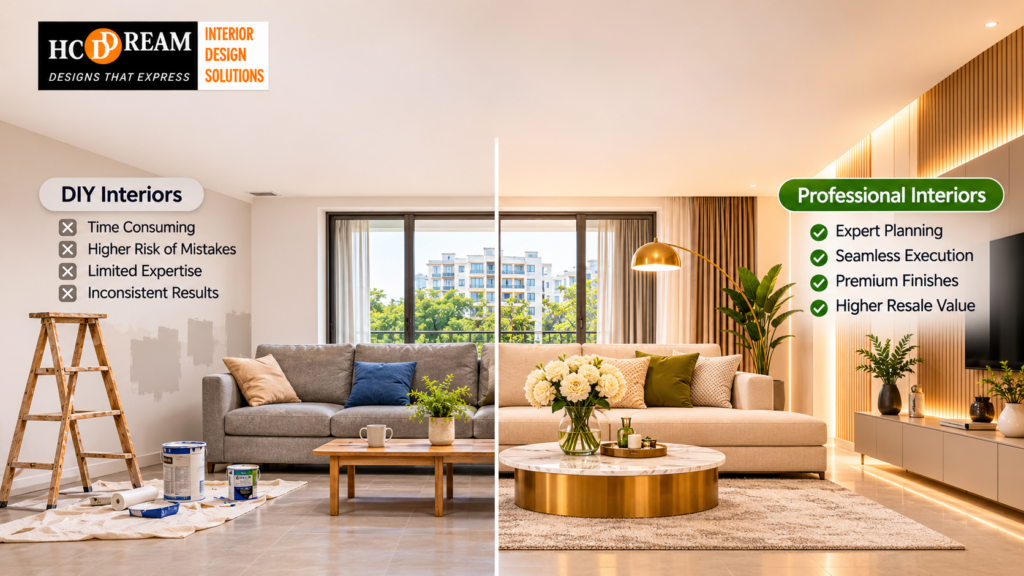
Designing your home is exciting. From choosing the perfect bedroom colours to creating clever storage and selecting furniture, every decision brings you closer to a space that feels like yours.
But there is one important question: should you design your interiors yourself or hire a professional?
DIY interiors offer creative freedom and the satisfaction of building something with your own hands. Professional interior design brings experience, planning, technical knowledge, and coordinated execution. Both approaches have advantages, but the right choice depends on your budget, available time, design requirements, and the complexity of your home.
For homeowners in Bangalore, where apartments range from compact city homes to spacious luxury residences, understanding the difference can help avoid unnecessary expenses and disappointing results.
Let’s explore the pros and cons of DIY and professional interiors, and how to decide which approach works best for your home.
1. Understanding DIY Home Interiors
DIY, or Do It Yourself, means planning and completing interior improvements without hiring a professional interior design team for the entire project.
It allows homeowners to take control of their spaces, experiment with ideas, and complete smaller projects at their own pace.
From refreshing a bedroom wall to styling a living room, DIY can make a home feel more personal without requiring a complete renovation.
Popular DIY interior projects
- Painting walls or creating simple accent walls
- Installing decorative wall panels or wallpaper
- Arranging furniture and updating room layouts
- Adding curtains, rugs, cushions, and decorative accessories
- Creating open shelves and organising storage
- Upcycling old furniture with new finishes
- Adding indoor plants and personal artwork
- Updating cabinet handles and simple fittings
For example, a bedroom can feel completely different with fresh bedding, warm bedside lighting, coordinated curtains, and a thoughtfully arranged gallery wall.
These changes may not require professional intervention, provided the work is simple and within your abilities.
2. The Advantages of DIY Interiors
DIY interiors appeal to homeowners who enjoy creativity, experimentation, and hands-on projects. You have greater control over the details and can make changes whenever inspiration strikes.
Here are some of the biggest advantages.
A. More Control Over Your Budget
One of the main reasons people choose DIY is the opportunity to reduce labour costs.
You can purchase materials directly, compare prices, reuse existing furniture, and complete projects in stages rather than investing in a complete interior package.
For instance, instead of replacing an entire bedroom setup, you could refresh the existing wardrobe, change the lighting, repaint the walls, and update the soft furnishings.
However, remember that DIY is not automatically cheaper. Incorrect measurements, unsuitable materials, damaged surfaces, and repeated purchases can increase the final cost.
B. Complete Creative Freedom
DIY gives you the freedom to experiment with colours, textures, patterns, and decorative elements.
You do not have to follow a particular design style or wait for someone else’s approval.
Whether you prefer minimalist interiors, contemporary styling, traditional details, or a combination of different influences, you can shape the space around your personality.
C. Flexibility to Work at Your Own Pace
Professional projects usually follow a planned schedule. DIY projects allow you to work according to your availability.
You can complete one corner of your bedroom this weekend and update the living room next month.
This flexibility can be useful when you are gradually improving an occupied home.
D. A Personal Sense of Achievement
There is something special about looking at a room and knowing you created its appearance yourself.
A refurbished table, handmade wall décor, or carefully styled bedroom can make the home feel more meaningful.
DIY also gives you an opportunity to learn practical skills that may be useful for future home improvements.
3. The Disadvantages of DIY Interiors
Although DIY sounds simple and affordable, the process can become challenging when a project involves technical work, detailed planning, or multiple activities.
Before choosing this approach, consider the following disadvantages.
A. Limited Design and Technical Knowledge
Online tutorials can provide inspiration, but they cannot replace practical experience.
You may know how to choose a wardrobe colour, but planning its internal storage, dimensions, door clearance, and installation requires more careful consideration.
Similarly, designing a false ceiling, planning electrical points, or selecting suitable materials involves technical decisions.
A lack of experience can result in interiors that look attractive individually but do not work well together.
B. Unexpected Expenses
DIY projects can become expensive when mistakes occur.
Some common problems include:
- Purchasing the wrong quantity of materials
- Incorrect measurements
- Choosing finishes that do not suit the space
- Damaging existing furniture or surfaces
- Repeating work because of poor execution
- Buying tools that are rarely used again
These costs can reduce the savings you originally expected.
C. Time-Consuming Execution
A small DIY project may take a weekend, but larger improvements can take considerably longer.
You may need to research materials, visit suppliers, compare prices, arrange deliveries, prepare surfaces, complete the work, and clean up afterwards.
If you are balancing work and family responsibilities, managing all these activities can become exhausting.
D. Inconsistent Results
Creating a visually cohesive home requires more than selecting attractive furniture and accessories.
Colours, materials, proportions, lighting, and layouts need to complement one another.
Without a clear design plan, different rooms may end up looking disconnected. A bedroom might feel modern while the adjoining spaces follow a completely different style.
This can affect the overall appearance of the home.
4. Understanding Professional Interior Design
Professional interior design involves working with an experienced designer or interior design company to plan, coordinate, and execute your home’s interiors.
Instead of making individual decisions as you go, you begin with a broader vision. The designer considers your lifestyle, available space, budget, preferred style, storage requirements, lighting, materials, and practical needs.
For a turnkey project, the design team can also coordinate the different stages of execution, helping bring the planned interiors together.
What does a professional interior design service include?
Depending on the company and project scope, services may include:
- Understanding your requirements and lifestyle
- Space planning and furniture layouts
- Design concepts and 3D visualisations
- Material, colour, and finish selection
- Modular kitchen and wardrobe planning
- Lighting and ceiling design
- Custom furniture and storage solutions
- Coordination of installation and execution
For homeowners planning an entire apartment, this structured approach can make the process more manageable.
5. The Advantages of Hiring Professional Interior Designers
Professional interiors are not only about creating a beautiful home. They are about making informed decisions that support the way you live.
Here are some important advantages.
A. Better Space Planning and Functionality
A professional designer looks at how every area of your home can be used effectively.
This is especially valuable in Bangalore apartments, where limited floor space, room proportions, and storage requirements often influence design decisions.
For example, a compact bedroom may benefit from a floor-to-ceiling wardrobe, a space-saving study desk, and appropriately sized bedside tables.
A designer can plan these elements together so that the room remains comfortable rather than crowded.
B. A Cohesive Design Across the Home
One of the biggest advantages of professional interior design is consistency.
The colour palette, furniture, materials, lighting, and finishes are planned to complement one another.
This does not mean every room needs to look identical. Instead, the home has a common design language that makes each space feel connected.
Whether you prefer warm contemporary interiors, understated luxury, or minimalist design, a professional can help translate your preferences into a complete home concept.
C. Access to Professional Knowledge and Materials
Interior designers work with different materials, finishes, hardware, and furniture solutions.
Their experience can help you understand the practical differences between options, including durability, maintenance, appearance, and suitability for specific spaces.
For example, a beautiful surface may not be appropriate for a high-use kitchen countertop. Similarly, a wardrobe finish that looks attractive in a sample may require more maintenance than you expect.
Professional guidance can help you make decisions with a clearer understanding of their long-term implications.
D. Better Coordination During Execution
An interior project may involve carpentry, electrical work, painting, ceiling installation, plumbing adjustments, lighting, and furniture installation.
Managing these activities independently can be difficult, particularly when different tasks depend on one another.
A professional team can coordinate the work according to the agreed project scope and schedule.
This helps reduce confusion, minimise avoidable rework, and maintain consistency between the original design and the finished interiors.
E. Solutions Designed Around Your Lifestyle
A home should reflect the people who live in it.
A family with children may need durable finishes, organised storage, and flexible common areas. A working professional may prioritise a comfortable home office. Someone who enjoys cooking may need a kitchen designed around movement and accessibility.
A professional designer considers these everyday requirements instead of focusing only on appearance.
6. The Disadvantages of Professional Interior Design
Professional interiors offer several benefits, but hiring a design team also involves certain considerations.
Understanding these before beginning can help you set realistic expectations.
A. Higher Initial Investment
Professional services generally involve design fees, labour, materials, project coordination, and execution costs.
The total investment depends on the property’s size, design complexity, material selection, customisation, and project scope.
If your requirements are limited to changing curtains or repainting one room, hiring a team for a complete interior project may not be necessary.
However, for a full-home renovation or turnkey interior project, the additional investment may provide value through planning, coordination, and professional execution.
B. Less Direct Control Over Every Detail
When working with a designer, you need to communicate your preferences and make decisions at different stages.
Although a good designer will involve you in the process, you may not personally handle every material purchase, measurement, or installation detail.
This is why clear communication, design approvals, and documented project requirements are important.
C. Finding the Right Design Partner Takes Time
Not every interior design company will be suitable for every homeowner.
You need to evaluate portfolios, understand the services included, discuss budgets, and review the expected execution process.
Choosing a team based only on attractive photographs or the lowest quotation can lead to mismatched expectations.
Take time to understand how the company approaches design, material selection, project management, and after-completion support.
7. DIY vs. Professional Interiors: A Side-by-Side Comparison
Both approaches can work well, but they serve different requirements.
| Factor | DIY Interiors | Professional Interiors |
| Budget | Can reduce labour costs | Higher initial investment |
| Creative control | Direct personal control | Collaborative with a designer |
| Time | Depends on your availability | Planned project schedule |
| Design planning | Based on personal research | Guided by design expertise |
| Technical work | Requires your own skills or separate help | Can be coordinated within the project scope |
| Customisation | Depends on your ability | More options for planned custom solutions |
| Execution | Managed by you | Managed or coordinated by the design team |
| Best suited for | Small decorative updates | Complete interiors and complex renovations |
The important point is that neither option is automatically better.
DIY works well when the project is manageable and does not involve complicated technical work. Professional design becomes more useful when several spaces, materials, services, and execution activities need to come together.
8. When Should You Choose DIY and When Should You Hire Professionals?
The right approach depends on what you want to change and how much responsibility you are comfortable managing.
Choose DIY for smaller improvements
DIY may be suitable when you want to:
- Refresh bedroom décor and soft furnishings
- Repaint a small wall
- Rearrange existing furniture
- Add artwork, mirrors, and indoor plants
- Update decorative accessories
- Organise shelves and storage baskets
- Replace simple cabinet handles
These projects usually involve limited changes and can be completed without altering the home’s essential structure or services.
Hire professionals for larger or technical projects
Professional support is recommended when your plans involve:
- Designing an entire apartment or villa
- Planning modular kitchens and custom wardrobes
- Changing room layouts or introducing partitions
- Electrical and lighting modifications
- False ceilings and integrated lighting
- Plumbing-related changes
- Custom furniture and built-in storage
- Coordinating multiple contractors and installations
Electrical, plumbing, structural, and other specialised work should be handled by appropriately qualified professionals. DIY attempts in these areas can create safety risks and expensive repairs.
9. Can You Combine DIY and Professional Interior Design?
Absolutely. In fact, combining both approaches can be one of the most practical ways to design a home.
You do not have to choose between managing everything yourself and hiring professionals for every detail.
A hybrid approach allows you to invest in professional expertise where it matters most while keeping smaller creative projects in your own hands.
What should professionals handle?
Consider hiring an interior design team for:
- Space planning and furniture layouts
- Modular kitchen and wardrobe design
- Electrical and lighting planning
- Ceiling and carpentry work
- Material selection for major installations
- Execution and project coordination
What can you manage yourself?
You can take responsibility for:
- Selecting cushions and decorative accessories
- Styling bookshelves and open shelves
- Choosing artwork and photographs
- Adding indoor plants
- Arranging decorative lighting
- Updating curtains and bedding
- Personalising selected corners of your home
For example, professionals can design and install a functional bedroom with a custom wardrobe, suitable lighting, and a well-planned layout. You can then add your preferred artwork, bedding, rugs, and decorative accents.
This approach gives you the benefit of professional planning without losing the personal touch that makes a house feel like home.
10. DIY Home Decor in Bangalore: What Should You Know Before Starting?
If you are exploring DIY home decor Bangalore ideas, it is important to consider your apartment’s layout, available materials, maintenance requirements, and the type of work involved.
Bangalore homes can have different design considerations depending on their age, construction, ventilation, natural light, and available space.
Before beginning a DIY project, follow these practical steps:
- Identify the purpose: Decide whether you want to improve appearance, storage, comfort, or functionality.
- Set a realistic budget: Include materials, tools, delivery, and a small allowance for unexpected expenses.
- Measure carefully: Record wall dimensions, furniture sizes, and available clearances before purchasing anything.
- Choose compatible materials: Consider durability, cleaning requirements, moisture exposure, and suitability for the space.
- Plan the overall look: Select a colour palette and style before purchasing individual accessories.
- Know your limitations: Avoid technical work that requires specialised skills or professional supervision.
- Keep the existing layout in mind: Make sure your improvements do not block walkways, windows, doors, or ventilation.
A little planning can prevent unnecessary purchases and help you achieve a more polished result.
11. How to Choose the Right Interior Design Company in Bangalore
If your project requires professional assistance, selecting the right design partner is just as important as choosing the design style.
When evaluating the Best Interior Design Company in Bangalore, look beyond attractive project photographs. You need a team that understands your lifestyle, communicates clearly, and can translate your requirements into practical interiors.
Here are a few things to consider.
Review the company’s portfolio
Look at completed projects to understand its design approach, attention to detail, material choices, and ability to work with different types of spaces.
Understand the complete scope of work
Ask what is included in the service. Clarify whether the company provides design planning, material selection, manufacturing, installation, and execution coordination.
Discuss your budget and priorities
A reliable design partner should understand your budget and help prioritise essential requirements. Ask for clarity on inclusions, exclusions, and potential additional costs.
Evaluate communication and project planning
Discuss timelines, design approvals, execution stages, and how updates will be shared. Clear communication can make the overall experience more comfortable.
Consider local experience
Homeowners searching for the Best Interior Designer in Bangalore or Interior Designers Near me Bangalore should consider teams familiar with local apartment layouts, residential requirements, material availability, and execution challenges.
If you live in Whitefield, exploring the Best Interior Designers in Whitefield Bangalore can also help you find a team that understands the needs of homeowners in the surrounding residential communities.
At HCD DREAM Interiors, the focus is on bringing together creativity, functionality, and thoughtful planning through end-to-end home interior solutions.
The objective is not simply to make a home look attractive. It is to create spaces that support everyday living and reflect the people who call them home.
FAQs
1. What are the risks of doing a DIY interior project?
DIY projects can involve incorrect measurements, unsuitable materials, poor finishing, unexpected expenses, and delays. Technical work involving electrical systems, plumbing, structural changes, or specialised installations can also create safety risks when handled without the right skills. Start with smaller decorative projects and seek professional assistance for complex work.
2. How much can I save by choosing DIY over professionals?
The savings depend on the size and complexity of the project, the materials used, and how much work you can complete yourself. DIY can reduce labour and service costs for smaller improvements such as painting, furniture styling, and decorative updates. However, mistakes, wasted materials, tool purchases, and rework can reduce those savings. Compare the complete estimated cost rather than considering material prices alone.
3. When is it absolutely better to hire an interior designer?
Hiring an interior designer is particularly useful when planning an entire home, renovating multiple rooms, designing custom wardrobes or modular kitchens, or coordinating complex lighting, ceiling, and carpentry work. Professional guidance is also valuable when space is limited or when you need several design elements to work together. Specialised electrical, plumbing, and structural tasks should be handled by qualified professionals.
4. Can DIY and professional design be combined?
Yes. A hybrid approach allows professionals to handle space planning, technical work, custom furniture, and major installations while you manage smaller decorative decisions. You can personalise your home through artwork, plants, cushions, curtains, and accessories after the main interior work is completed. This combines professional planning with your own creative expression.
5. What tools or skills are needed for a DIY home makeover?
Basic DIY projects may require a measuring tape, screwdriver set, paintbrushes, rollers, masking tape, a level, and appropriate safety equipment. Useful skills include measuring, basic painting, furniture assembly, colour coordination, and simple surface preparation. More advanced work may require specialised tools and training, so it is better to hire qualified professionals when a project involves technical installations or safety-related changes.
Final Thoughts
Your home should reflect your personality, support your lifestyle, and make everyday moments more enjoyable. Whether you choose DIY or professional interiors, the goal remains the same: creating a space that feels comfortable, functional, and truly yours.
DIY is a wonderful option for smaller improvements and personal touches. Professional interior design offers a more structured approach when your requirements involve detailed planning, customisation, and coordinated execution.
You can also combine the two, allowing professionals to build the foundation while you add the finishing touches that make the space personal.
If you are planning a new home interior or considering a complete makeover in Bangalore, thoughtful planning can make all the difference.
Ready to turn your ideas into a beautifully designed home?
Explore HCD DREAM Interiors for end-to-end home interior solutions that bring together creativity, functionality, and considered design. From space planning to thoughtfully executed interiors, the team can help you create a home that feels right for your lifestyle.