How to Balance Style and Function in Modern Home Interiors
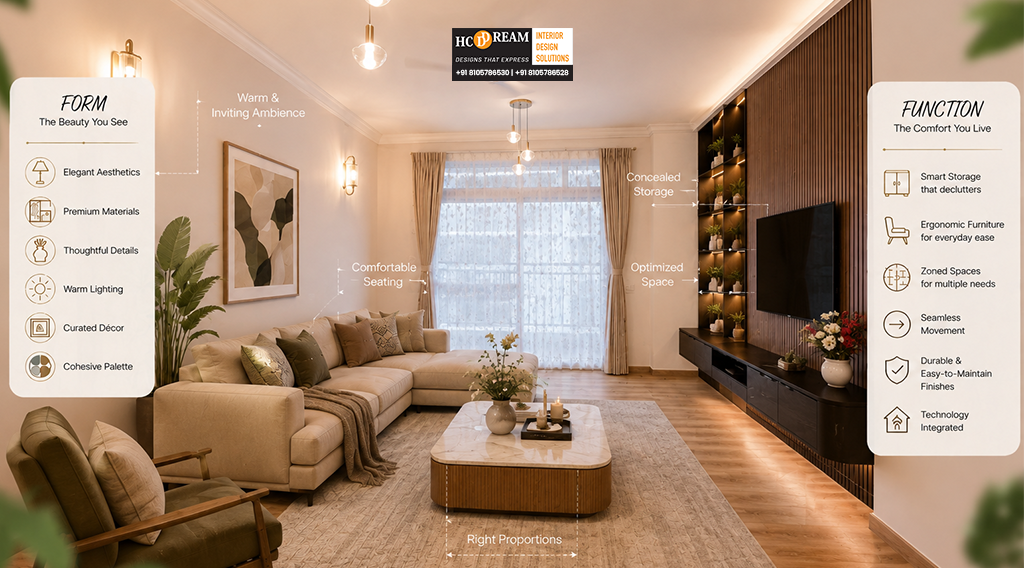
A beautiful home should make you stop and admire it. But it should also make everyday life easier. The best interiors aren’t simply about stunning furniture, trendy colors, or expensive finishes. They are spaces where everything has a purpose while still creating a strong visual impression. This balance is at the heart of functional interior design. For Bangalore homeowners, it is especially important. Apartments and villas need to accommodate modern routines, work-from-home requirements, storage, family time, entertaining, and personal relaxation… all without feeling cluttered. At HCD DREAM Interiors, we believe style and functionality should never compete. They should work together to create modern home interiors that look sophisticated while supporting the way you actually live. Whether you’re designing a new apartment or renovating an existing home, here’s how to achieve that balance. What Does Style and Function Really Mean? Style is how your home looks and feels. Function is how well your home works. A stylish interior may feature beautiful materials, elegant lighting, and carefully selected furniture. A functional interior ensures there is enough storage, comfortable circulation, appropriate lighting, and practical solutions for everyday activities. The ideal home combines both. Think of a beautifully designed wardrobe. It should complement the bedroom visually, but it should also provide enough space for your clothing, accessories, luggage, and everyday essentials. That’s where thoughtful design makes the difference. Why Functionality Should Come Before Decoration It’s tempting to start an interior project by choosing colors, wallpapers, furniture, or decorative pieces. However, the foundation should always be functionality. Before selecting finishes, consider: Once these questions are answered, the aesthetic direction becomes much easier to establish. A beautiful room with poor functionality eventually becomes frustrating. A functional room with thoughtful styling can become both practical and visually impressive. Start With How You Live Every homeowner has different routines. A family that enjoys hosting weekend dinners needs a different living room from someone who prefers quiet evenings. A remote professional may need a dedicated workspace, while a family with children may prioritize study zones and flexible storage. Understanding your lifestyle helps determine what your home actually needs. Ask Yourself These Questions Before planning your interiors, consider: These answers provide a practical foundation for your design. Smart Space Planning Creates Better Interiors Space planning is one of the most important parts of functional interior design. Even a large room can feel cramped when furniture is poorly positioned. Conversely, a compact apartment can feel surprisingly spacious when every element is planned carefully. Good space planning considers: The objective isn’t to fill every available area. It’s to create enough space for people to move, relax, work, and connect comfortably. Choose Furniture That Works Harder Furniture should contribute to both the appearance and performance of your home. In modern apartments, multi-functional furniture can be especially valuable. Consider: Think Beyond Appearance Before purchasing a piece, ask: The most beautiful furniture isn’t necessarily the best choice. The best choice is furniture that looks right and works right. Make Storage Part of the Design Storage doesn’t need to look like storage. One of the strengths of well-planned interiors is the ability to integrate organization into the overall design. For example: Bedroom Floor-to-ceiling wardrobes can maximize vertical space while maintaining a clean appearance. Living Room A customized TV unit can combine display areas with concealed storage. Kitchen Internal organizers can make cabinets easier to use without affecting the exterior design. Entryway A compact console with shoe storage can keep the entrance organized. When storage is integrated thoughtfully, the home feels calmer and more refined. Use Lighting for Beauty and Function Lighting can completely transform an interior. But decorative lighting alone isn’t enough. A well-designed home typically combines several types of lighting. Ambient Lighting Provides overall illumination. Task Lighting Supports specific activities such as reading, cooking, or working. Accent Lighting Highlights artwork, textures, architectural features, or decorative objects. Decorative Lighting Adds personality and visual interest. In a bedroom, for example, bedside lighting can provide practical illumination while also creating a warm evening atmosphere. This is where style and function naturally come together. Let Materials Support Your Lifestyle Materials should look beautiful, but they should also suit the way your household functions. A busy family may benefit from durable and easy-to-maintain surfaces. A luxury homeowner may prioritize premium veneers, natural stone, textured finishes, and refined hardware. When choosing materials, consider: Choosing materials purely because they look attractive can create problems later. The right material is one that performs well while enhancing the design. Create Visual Harmony Without Making Everything Match A common misconception is that every element in a room needs to match. In reality, modern interiors often look more sophisticated when different textures and finishes work together. You can combine: The key is creating relationships between these elements. A consistent color palette, repeated textures, or complementary finishes can connect different pieces without making the room feel overly coordinated. Keep Modern Interiors Warm and Personal Modern design doesn’t have to mean cold, empty, or impersonal. The warmth comes from the details. Natural wood, soft fabrics, indoor plants, artwork, photographs, books, and carefully selected accessories can make contemporary spaces feel lived-in. This is particularly important in modern home interiors, where clean lines and minimalism can sometimes become too sterile. The goal is not to remove personality. It’s to express personality with intention. Design Each Room Around Its Purpose Different rooms need different balances between style and function. Living Room Prioritize: Bedroom Focus on: Kitchen Consider: Home Office Prioritize: When every room is designed according to its purpose, the entire home becomes more intuitive. Avoid Overdesigning Your Home One of the easiest ways to lose the balance between style and function is adding too much. Too many decorative pieces, furniture items, colors, or patterns can make even a large home feel crowded. Before adding something, ask: Does it improve the room, or simply fill space? This simple question can help maintain visual clarity. A premium interior often feels luxurious because it has been carefully edited—not because it contains more